

The Intersection of Events, Travel, and Accommodation, How Secondary Marketplaces Bridge the Industry Gaps
9 May 2024
Much like Beyoncé, live events are themselves enjoying more than a Renaissance post-pandemic. Within this boom lie both challenges and opportunities for those in the ticketing, travel and accommodation sectors.
Just to put things into perspective, a previous analysis of the Taylor Swift “Eras” tour’s impact found that the first 28 shows alone contributed an additional $98.2 million in hotel room revenue compared to typical seasonal levels. Now, three months later, that conservative estimate places the overall impact at $208 million. In context, this figure represents the combined room revenue of New York City and Philadelphia for an entire week.
However that doesn’t include extended stays by fans, increased transportation demand nor any ancillary spending- and this all represents just one artist’s impact. Factor in the ever-increasing return to live sports attendance and demand for live concerts and entertainment and it’s no surprise that event-based travel and accommodation is booming. Millions of people every week are spending more and more on travel and accommodation to enjoy some real-life experiences, often away from home and unsurprisingly…
Plans Sometimes Change…
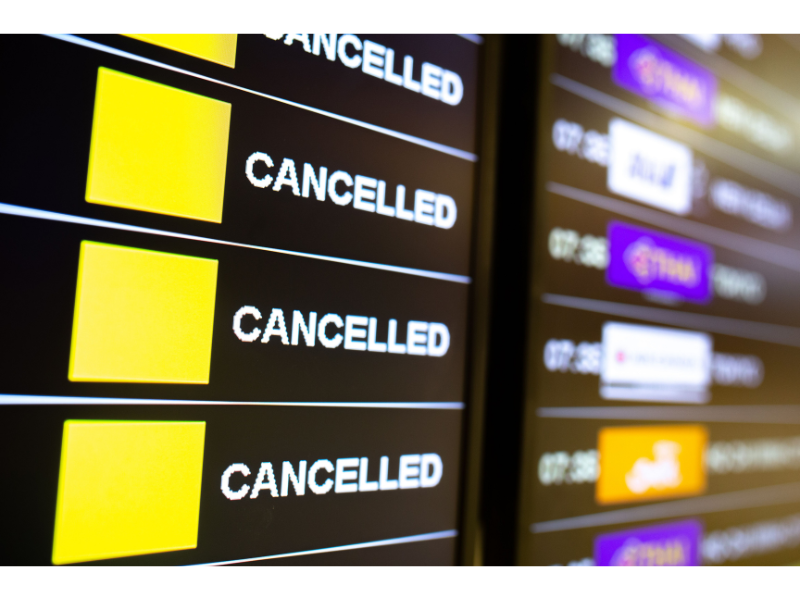
Countless event-goers go through the process of booking non-refundable tickets, flights, and hotel rooms, only to find themselves unable to attend. Data from Eventbrite shows approximately 40% of event tickets go unused each year due to cancellations or no-shows. Time pressures also compound this- a study conducted by Ticketmaster found that approximately 5% of concerts are cancelled or rescheduled each year, with the majority of cancellations occurring within 48 hours of the scheduled event. For those who’ve coupled the concert with a hotel and travel plans this leaves them in the very unfortunate position of losing out on fun and losing a lot of money.
But it’s not all the fault of organisers and artists- customers have their own reasons. Research conducted by the U.S. Travel Insurance Association found that 49% of respondents cited personal illness or injury as the primary reason for canceling travel plans followed by 37% for family member illness or death. Hardly unreasonable circumstances when we think about things in human terms.
It’s 2024… Surely there’s flexibility in bookings for people to get their money back?
The notion of changing travel plans, while seemingly a practical solution to avoid cancellation and waste, unfortunately presents its own set of challenges. Adjusting bookings, be it for flights, hotels, or other travel-related services, often incurs steep penalties and substantial fees that can sometimes rival or even exceed the original booking costs. Airlines and hotels, seeking to minimise revenue loss from last-minute changes, have instituted policies that make modifications both financially punitive and logistically cumbersome. For instance, a report from the U.S. Department of Transportationhighlights how change fees for flights can range significantly, often leaving passengers out of pocket.
Equally, the availability of alternative options is not always guaranteed, especially during peak travel seasons when demand outstrips supply. This scarcity of alternatives, coupled with the lack of flexibility in the travel industry’s booking systems, corners consumers into a tight spot. Not only do they face losing substantial amounts of money, but the complexity and often inaccessibility of change processes can deter travellers from attempting to adjust their plans at all. In an age where consumer convenience is paramount in so many sectors, the travel industry’s rigidity in accommodating change starkly contrasts the status quo, contributing further to the problem of travel waste.
With more individuals planning trips around concert dates, the symbiotic relationship between event attendance and travel accommodations has never been more evident. Hospitalitynet.org reports an uptick in accommodation bookings tied to event attendance, but this trend is a double-edged sword.
The Role of Secondary Marketplaces
Secondary marketplaces, where people can come together to buy and sell in a peer-to-peer setting play a crucial role in addressing these challenges. StubHub, the third-largest ticketing website globally, facilitates the resale of event tickets, providing consumers with a platform to recoup their investment in case of cancellations or changes. With over $5 billion in annual revenue and 65% of its tickets being sold by individuals rather than brokers, StubHub’s massive scale of operations provides an incredible scope for the interplay between ticketing, travel and accommodation sectors and its success highlights the demand for flexibility and adaptability in the event industry.
Doing the maths, it’s obvious to see that event-related transportation and accommodation bookings are a multi-billion dollar opportunity when factoring in statistics around cancelation, no-shows and the simple fact that people’s lives (and their calendars) are more complicated than they used to be. So who stands to benefit from fixing the problem?
Partner Solutions for Flexibility and Reduced Wastage
For ticketing companies and reservations workers cross-industry, providing their customers a safety net for their travel investment should be a no brainer, right? It would trigger deeper customer loyalty, enhance brand reputation and translate into reduced losses from unoccupied seats and rooms in a win-win for consumers and businesses.
Platforms like TransferTravel.com facilitate just this. A bank of travel opportunities that can be resold to benefit both the customer and their provider. Bouncing back post-pandemic, the business’ model is simple- an eBay for unusable travel plans. Yet it’s more than just a marketplace; rather a new paradigm that empowers the industry to meet the needs of the modern event-goer. More companies like this are leading the charge towards a more adaptable, sustainable, and customer-focused event experience ecosystem but the pieces of the puzzle need to come together in logical partnerships.
For accommodation providers, ticket resellers, and other key players in the live entertainment ecosystem, it’s time to rethink our approach. By blending customer-focused solutions with responsible business practices, we are on the brink of a new era where the unpredictable nature of event attendance is no longer a setback, but a chance for innovation and growth.
Thoughts? Want to talk about working together? I’d love to hear from you. Email me at pete.hygate@transfertravel.com or talk to me on LinkedIn